Why Was Merv Important on the Silk Road? The Oasis City Explained
Why was Merv important on the Silk Road? Its power came from location, water, and continuity. The Merv oasis sat at a major crossroads in Central Asia, where routes connected Iran, the steppe, Afghanistan, and lands farther east. Over centuries, different cities rose beside one another in the same oasis, turning Merv into one of the great urban landscapes of the Silk Roads.
That history makes Merv an ideal setting for The Silent Guardian’s Merv meeting. A place shaped by layers of cities and cultures is a natural location for a story about travelers moving across layers of time.
Where was ancient Merv?
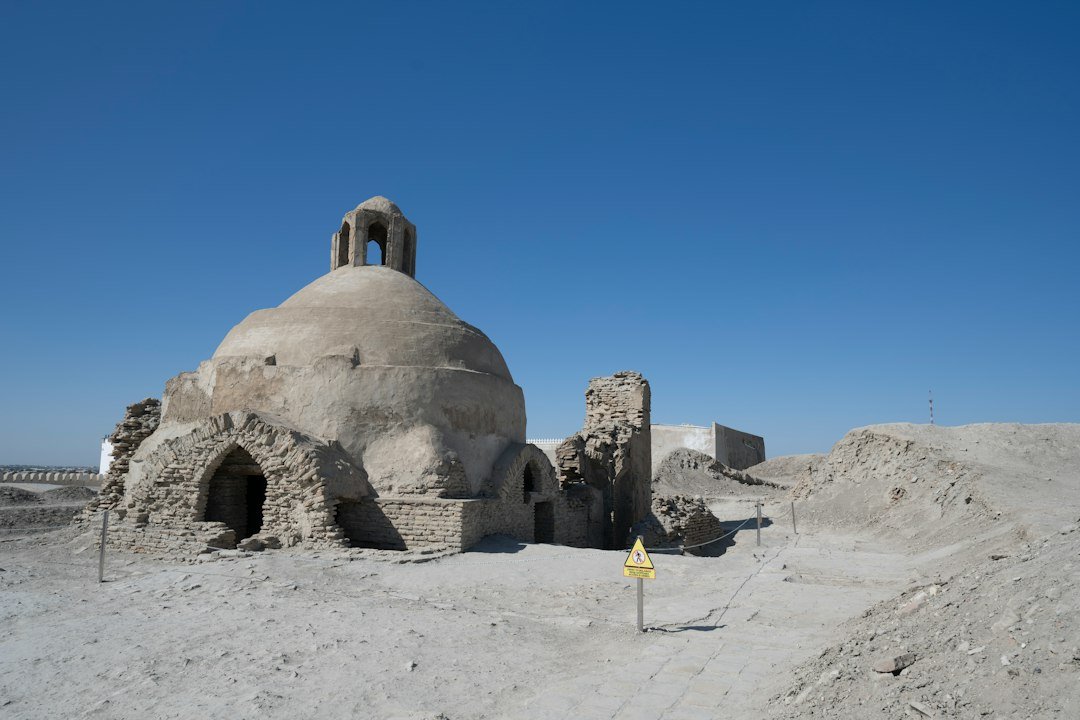
Ancient Merv lies near modern Mary in Turkmenistan, within the Murghab River oasis. UNESCO describes it as the oldest and most completely preserved group of oasis cities along the Silk Roads of Central Asia.
Merv was not one city that simply expanded forever. The archaeological landscape contains several adjacent urban centers built at different times as settlement patterns and the river system shifted. That unusual structure preserves a long record of urban life across millennia.
Why did caravans need Merv?
Long-distance trade depended on dependable stopping points. Travelers needed markets, water, food, lodging, information, and access to routes leading in several directions. Merv’s oasis environment made it far more than a point on a map.
It functioned as a place where journeys could pause and restart. Goods could change hands, travelers could join different routes, and information could move between regions. That relay system is why our guide to Silk Road travel time emphasizes cities as much as distance.
Merv connected East and West
Merv stood near routes linking Central Asia with the Iranian world and farther west. Its location gave it value under many different political powers. Control of an oasis city could mean influence over trade, taxation, communication, and movement across a much larger region.
The city’s importance changed over time, but it repeatedly returned as a major center because geography kept making the oasis useful.
A city made of cities
One of the most fascinating features of Merv is its layered urban form. UNESCO identifies major remains including Erk Kala, Gyaur Kala, and the later Sultan Kala. New centers were built near older ones rather than directly erasing every previous settlement.
For history readers, that means the site preserves visible traces of different eras. For science-fiction readers, it is difficult to imagine a more fitting landscape: centuries sit beside one another in physical space.
Merv was more than a marketplace
Trade routes moved ideas as well as objects. Merv’s long history included religious, cultural, and political change involving Persian, Hellenistic, Buddhist, Arab, and Turkic worlds. The city’s role as a crossroads made it a place where different traditions could coexist, compete, and blend.
This is a useful correction to the simplified image of the Silk Road as a line carrying silk westward. The network connected communities, languages, technologies, beliefs, and institutions.
Why Merv matters in The Silent Guardian
In The Silent Guardian, Merv works as more than an exotic backdrop. Adam reaches a city where hidden information can move through a crowded crossroads, mirroring the way historical Merv connected distant worlds.
The setting also links naturally to the story’s larger route through Samarkand and the Central Asian trade network. Readers can follow those places as historical locations and as narrative waypoints.
The takeaway
Merv was important on the Silk Road because its oasis sustained a major crossroads between regions. Its markets, water, political value, and repeated urban development allowed it to remain important across many eras.
For a deeper historical overview, visit UNESCO’s Ancient Merv World Heritage page. Then continue with The Silent Guardian online to see the city become part of a much stranger journey through history.