Why Dust Can Mimic Dyson Sphere Waste Heat
Why can dust look like a Dyson sphere? Because both dust and hypothetical power collectors can absorb visible starlight and re-emit energy at infrared wavelengths. An unexpectedly bright infrared measurement may therefore indicate ordinary matter—not a technological structure. Background galaxies can also blend into a star’s image, making the star appear to have excess heat it does not actually produce.
Understanding these Dyson sphere false positives is essential when reading news about technosignature candidates. Here are the main impostors, the tests researchers use, and a real example from Project Hephaistos.
First, what is infrared excess?
Stars radiate light over many wavelengths. Astronomers use the star’s properties and distance to predict a rough spectral energy distribution. If a system is brighter in infrared than the stellar model predicts, the difference is called an infrared excess. This is evidence that the simple model is incomplete—not proof of a particular explanation.
Our Dyson-sphere waste heat primer explains why a hypothetical collector might produce such a signal. NASA’s technosignature overview also notes that disks around young stars produce telltale infrared light naturally.
False positive 1: a dusty debris disk
Dust grains orbiting a star absorb energy and become warm enough to glow at longer wavelengths. Disks can persist around stars after planets begin to form, and some are rich in colliding debris. Infrared emission from this material may be much stronger than expected from the star’s surface alone.
A researcher asks whether the star is young, whether dust is plausible for its type, and whether other observations match a disk. An intriguing spectrum may warrant further work even if a debris disk looks likely, but the natural hypothesis must be tested first.
False positive 2: a galaxy behind the star
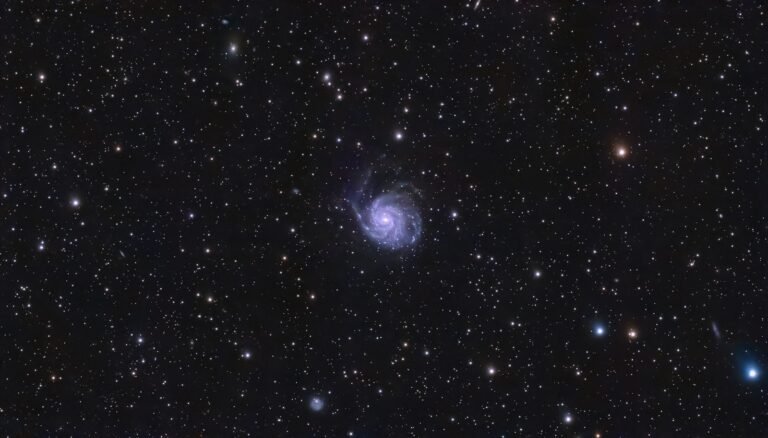
In sky images, two unrelated objects can appear extremely close together. A foreground star may align with a distant, dusty galaxy that emits substantial infrared radiation. If an infrared survey cannot separate them cleanly, the catalog may assign some or all of the galaxy’s emission to the star.
This is not a claim that the star itself is unusual. It is a measurement and source-identification problem. Higher-resolution observations, checks of the infrared and optical centroids, and radio data can expose a blend.
False positive 3: source confusion and catalog mismatch
Astronomical surveys differ in resolution, sensitivity, and observation date. A source that looks single in one dataset may be resolved into several components in another. Matching a point in a visible-light catalog to a nearby infrared source may accidentally combine different objects. Research teams therefore compare positions carefully and look for contamination.
The real example: Project Hephaistos candidate G
Project Hephaistos reported seven interesting M-dwarf candidates in 2024 after surveying millions of objects. That was a selection for further investigation, not seven confirmed Dyson structures. In 2025, high-resolution radio observations of candidate G revealed a background active galactic nucleus (AGN) whose infrared emission explained the anomaly. The study found no radio emission at the M-dwarf’s position. Read the 2025 follow-up study and the 2024 candidate selection paper.
The case shows why scientific follow-up is a success even when it weakens an exciting interpretation: it identifies which apparent anomalies are real properties of the target.
How astronomers distinguish heat from contamination
- Compare accurate positions across optical, near-infrared, mid-infrared, and radio surveys.
- Inspect higher-resolution images for nearby galaxies or companions.
- Fit multiple explanations such as dust, stellar activity, and source blending.
- Check the spectrum for clues about the type of emitting material.
- Request follow-up observations where ambiguity remains, and keep uncertainty explicit.
What this means for science-fiction writers
A plausible first-contact story can feature a research team whose spectacular infrared candidate collapses under better imaging. The ethical dilemma then changes: does the scientist publish the caveat now, disappointing backers, or delay while gathering stronger evidence? The drama comes from rigor and uncertainty, not from pretending a false positive is a failure of science.
Frequently asked questions
Does infrared excess always mean dust?
No. There are multiple astrophysical and observational explanations, and the best one depends on the particular source. The key is not assuming it means engineering.
Can a background galaxy affect an infrared survey?
Yes. The apparent alignment can blend unrelated objects in lower-resolution data, a demonstrated issue for some Dyson-sphere candidates.
Are any Dyson spheres confirmed?
No confirmed extraterrestrial Dyson sphere has been established by this research. Candidates require independent scrutiny.
For another observational test, compare dimming and infrared emission in our Dyson swarm versus sphere guide. An unusual data point is a question worth investigating, not a verdict.