What Language Did Silk Road Merchants Speak? The Sogdian Connection
What language did Silk Road merchants speak? There was never one universal language across the entire network, but in Central Asia one language became especially important: Sogdian. From roughly the early centuries CE through the early medieval period, Sogdian merchants built communities along major trade routes, and their language became a widely used commercial language across parts of the Silk Roads.
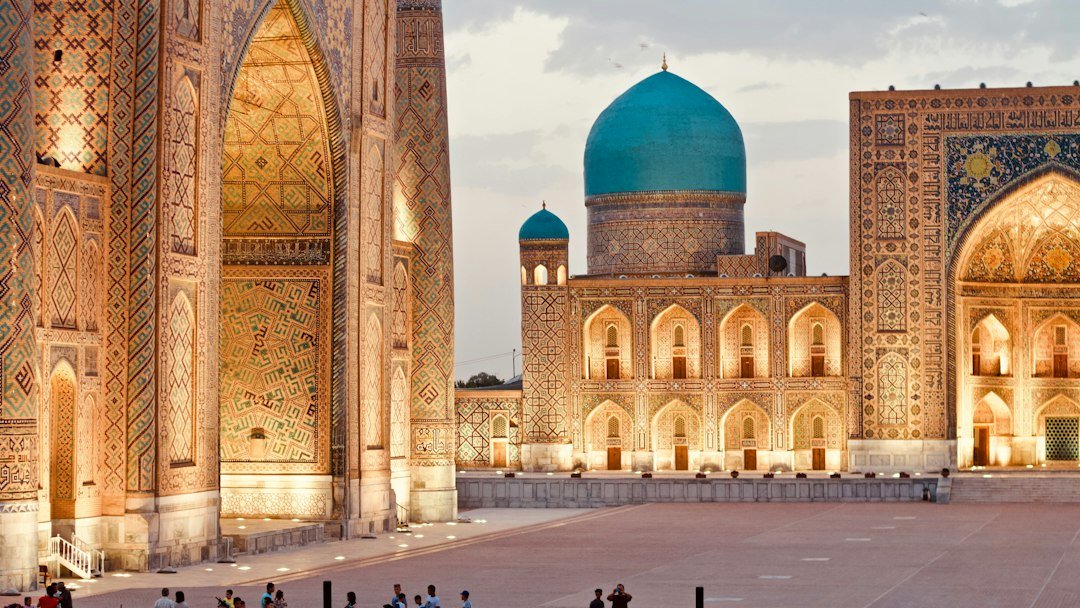
That matters for stories set in places such as Samarkand. In The Silent Guardian’s Samarkand chapter, language is part of the challenge of moving through a world connected by trade but divided by culture and politics.
There was no single “Silk Road language”
The Silk Road stretched across an enormous region and existed for centuries. Travelers encountered Chinese languages, Iranian languages, Turkic languages, Sanskrit and related literary traditions, Greek in earlier periods, Arabic and Persian in later centuries, and many local languages in between.
So the best answer is not that every merchant spoke one tongue. Communication depended on region, time period, interpreters, multilingual traders, and the commercial communities that connected major markets.
Why Sogdian became so important
Sogdian was an Eastern Iranian language associated with Sogdiana, especially the region around Samarkand and Bukhara. Encyclopaedia Iranica notes that Sogdian merchants became major caravan traders in Central Asia and established communities far to the east.
Because those merchant networks stretched across long distances, Sogdian became a kind of lingua franca in parts of the trade system. A lingua franca is a language used between people who may have different native languages but need a shared way to communicate.
Samarkand was at the center of the Sogdian world
Samarkand was one of the great Sogdian cities. Its position in the Zeravshan valley and its connections to routes running east and west made it a natural commercial center.
Sogdian traders did more than carry goods. Their communities helped move religious ideas, artistic styles, music, administrative practices, and writing systems. The Silk Road was therefore a communication network as much as a trade network.
What do surviving Sogdian texts tell us?
Many surviving Sogdian documents have been found far from Samarkand, including in places such as Dunhuang and Turfan. That distribution is evidence of how widely Sogdian-speaking communities traveled and settled.
The documents include religious and secular material, showing that Sogdian was not limited to a narrow merchant code. It was a living language used across diaspora communities.
Did everyone in Samarkand speak Sogdian forever?
No. Languages change with political and cultural history. Sogdian gradually lost ground as Persian and Turkic languages became more influential in the region. By later periods, the linguistic world of Samarkand looked very different from the one encountered by merchants centuries earlier.
That is an important detail for time-travel fiction: arriving in the same city at a different date could mean encountering a different language, ruling power, religion, and social order.
Language makes historical time travel harder
Science fiction often treats translation as a small problem, but language can reveal exactly when and where a traveler has arrived. Vocabulary, pronunciation, scripts, and borrowed words shift over generations.
This is one reason the journey through Merv and Samarkand is useful for the world of The Silent Guardian. The cities were connected, but they were never culturally identical.
The takeaway
Silk Road merchants did not share one universal language. However, Sogdian became one of the most important commercial languages across Central Asia because Sogdian merchants built a far-reaching network of communities and trade relationships.
For deeper reading, see Encyclopaedia Iranica’s Sogdian language overview and its article on Sogdian trade. Then follow the fictional route through The Silent Guardian online.