What Is Xenoarchaeology? Alien Ruins in Science Fiction
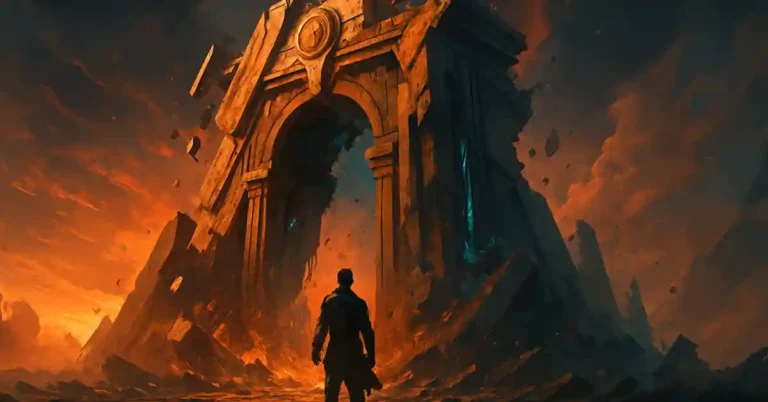
What is xenoarchaeology? In science fiction, xenoarchaeology—sometimes called alien archaeology—is the study of artifacts, ruins, technologies, and other material evidence left by extraterrestrial civilizations. It asks a thrilling question: what could we learn about intelligent life if the aliens were gone but their objects remained?
Unlike first contact, xenoarchaeology often begins with silence. The mystery is reconstructed from buildings, machines, inscriptions, orbital debris, altered landscapes, or abandoned habitats.
Is xenoarchaeology a real academic field?
Not in the way archaeology, astronomy, or astrobiology are established disciplines, because no confirmed extraterrestrial artifacts are available to study. The term is mainly speculative. However, real researchers do study technosignatures—possible observable evidence of technology beyond Earth—and archaeologists think carefully about how material remains reveal cultures whose people are no longer present.
What would alien archaeologists look for?
A plausible xenoarchaeology team might study several types of evidence:
- Structures on a planetary surface.
- Artificial satellites or orbital debris.
- Unusual mining or industrial patterns.
- Long-lived materials with non-natural composition.
- Information encoded in machines or monuments.
- Planetary changes difficult to explain through geology alone.
- Abandoned habitats on moons, asteroids, or space stations.
The hardest problem: interpreting without assumptions
Human archaeology already faces the danger of projecting modern assumptions onto past societies. Alien archaeology magnifies that problem. An object that looks ceremonial to us might be a machine. A pattern that looks like writing could be decoration, biology, or data storage.
The farther a species is from human biology and culture, the less reliable intuition becomes.
Technology can outlast its makers
One of the most haunting xenoarchaeology ideas is that a civilization’s machines may survive much longer than its people. Automated stations, probes, archives, or maintenance systems could continue operating for millennia.
That creates a different kind of “first contact”: humans may meet an alien civilization through what it left behind.
Why alien ruins are so effective in science fiction
Ruins combine discovery with absence. They let writers reveal a civilization piece by piece while keeping important questions unanswered. What happened here? What did these people value? Is the site truly abandoned? Should the technology be used?
Each artifact can advance both plot and worldbuilding.
Xenoarchaeology vs. technosignatures
A technosignature is any potentially observable sign of technology, such as unusual electromagnetic signals or large-scale engineering. Xenoarchaeology usually implies material remains that can be investigated more directly.
The two ideas overlap. Detecting a possible technosignature could eventually lead explorers to an archaeological site.
Story questions alien ruins naturally create
- Who owns an artifact found on another world?
- Should dangerous technology be activated?
- Can an extinct culture give meaningful consent about its remains?
- What if rival teams interpret the same evidence differently?
- What if the civilization deliberately designed its ruins to be found?
- What if the ruins are younger than humanity expected?
Build the civilization backward
For writers, a useful trick is to design the evidence first. Decide what your characters find, then ask what kind of society would leave that evidence. Material remains should reflect biology, environment, technology, conflict, and values.
Our Sci-Fi Worldbuilding archive is a good starting point if you want to build the culture behind the ruins.
The appeal of xenoarchaeology
Xenoarchaeology turns the search for aliens into a detective story across deep time. The aliens do not need to appear onstage for their choices to shape the plot. A broken machine, a buried city, or an impossible object can make a dead civilization feel present—and make the universe feel much older than humanity.