Causal Loops vs Bootstrap Paradoxes: Are They the Same Thing?
In the causal loop vs bootstrap paradox comparison, the terms are closely related but emphasize different things. A causal loop is any chain of events in which causes and effects form a closed circle. A bootstrap paradox usually highlights something inside that loop—information, an object, or an idea—that seems to have no external origin.
Because many famous examples contain both, the terms are often used interchangeably in popular discussions. Separating them makes time-travel stories easier to analyze.
What is a causal loop?
A causal loop occurs when event A causes event B, event B eventually leads to time travel, and that trip helps cause event A. No single link is uncaused; the strange part is that the chain closes on itself.
For example, a scientist receives a warning from their future self. The warning causes them to build a time machine. Years later, they use that machine to send the original warning. The warning has a clear cause at each step, but the complete sequence is circular.
What is a bootstrap paradox?
A bootstrap paradox asks where something in that loop originally came from. Imagine a traveler carrying a famous equation into the past and giving it to the scientist credited with discovering it. The scientist publishes the equation. Years later, the traveler learns it from that publication and carries it back.
Who invented the equation? Inside the loop, nobody did. Its informational origin appears missing.
So what is the difference?
Think of causal loop as the broader structure and bootstrap paradox as a striking feature that some loops contain. Every bootstrap paradox involves circular causation, but writers sometimes create causal loops where no object or information lacks an obvious origin.
Do causal loops violate logic?
A self-consistent causal loop can be strange without containing a direct contradiction. The events may fit together perfectly. The puzzle is explanatory: we are accustomed to causal chains that trace backward without closing.
The Novikov self-consistency principle is often associated with this kind of fixed-history loop. Time travelers can participate in past events as long as the full history remains consistent.
Objects make the puzzle even stranger
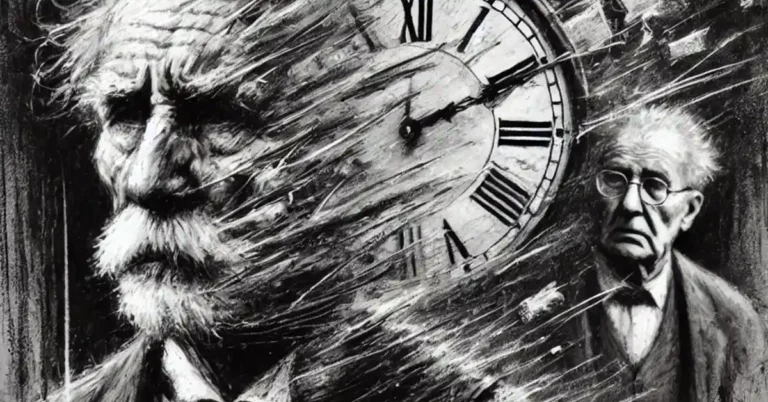
Suppose someone takes a pocket watch fifty years into the past and gives it to their younger self. Decades later, that younger person takes the same watch back. The watch follows a closed path through spacetime.
Now ask about wear, age, and manufacturing. Was the watch ever made outside the loop? Can an object survive indefinitely through repeated cycles? Fiction can use those physical details to make the abstract paradox concrete.
Information loops are easier to sustain in fiction
A poem, equation, password, or design can circulate without requiring a physical object to survive forever. That makes informational bootstrap paradoxes especially common in stories.
But they raise an authorship question: if a composer learns a song from their future self and later sends it back, who composed it?
Causal loop vs predestination paradox
A predestination paradox usually emphasizes that attempts to change history end up causing the known event. That story may contain a causal loop, but its dramatic focus is inevitability rather than origin.
How writers can use the distinction
- Use a causal loop to build a mystery whose beginning and end connect.
- Use a bootstrap paradox when you want readers to question origin or authorship.
- Use predestination when the emotional point is that prevention becomes causation.
- Establish whether your timeline is fixed before relying on any of these structures.
The takeaway
For causal loop vs bootstrap paradox, the cleanest distinction is structural: a causal loop is circular cause and effect; a bootstrap paradox is a causal loop where something appears to exist without an independent point of origin. They often travel together, but they are not quite the same question.