Writing Space Communication Delays Without Killing the Plot
Space communication delay in science fiction is more than a technical inconvenience. If a message takes minutes or hours to arrive, characters cannot interrupt each other, mission control cannot offer instant rescue instructions, and every decision has to survive a period of uncertainty. That makes light-speed lag a powerful story engine.
You do not need faster-than-light communication to keep a plot moving. You need to understand one-way delay, response time, and what a character does while waiting.
How long does a message take to travel through space?
Radio and laser signals travel at the speed of light. For near-Earth operations the delay is usually small; at interplanetary distances it becomes noticeable. NASA’s space-communications explainer gives a Mars illustration: roughly 4 to 24 minutes one way depending on the relative positions of Earth and Mars.
A reply needs its own travel time. If the outgoing message takes twelve minutes to reach Mars and the reply takes another twelve, the earliest possible answer arrives about 24 minutes after sending—before considering human reaction or processing time. Those are example values, not a fixed Mars delay.
| Story situation | What matters | Drama it creates |
|---|---|---|
| One-way alert | Time to receive an instruction | Information arrives after circumstances change |
| Question and answer | Outward lag + response + return lag | Characters must act before hearing back |
| Blocked path or conjunction | Signal may be unavailable | A complete communications blackout |
| Interstellar message | Years between systems | Messages become records for future generations |
Distinguish a delay from a blackout
A delayed transmission can arrive clearly, just late. A blackout means the signal cannot get through reliably at all. Relative geometry, an intervening body, the Sun’s position, equipment failure, or interference can contribute to missed communications. An orbital relay may improve coverage without making the propagation delay disappear.
Writers often collapse both into “the radio was down.” Be specific: is the transmitter broken, is the receiver out of view, is the path blocked, or is the message simply still traveling?
Five ways to use latency without stopping the story
1. Build scenes around asynchronous messages
Replace normal turn-taking dialogue with recordings, text packets, delayed video, or bursts of status data. Characters prepare replies based on messages describing a situation that may no longer exist. Two people can even send conflicting instructions while each believes they have the latest information.
2. Give local characters genuine authority
If every decision requires approval from Earth, a Mars crew may be paralyzed. Plausible missions need autonomy, local procedures, and clear responsibility. In a thriller, a junior engineer’s permission to bypass a rule becomes the decisive question.
3. Let a second event occur during the wait
A rover sends an emergency image. While the crew waits for analysis, the dust storm advances. A response eventually arrives, but it solves the earlier version of the problem. The delay adds consequences rather than empty dead time.
4. Make information quality part of the conflict
A short message can carry a fact but omit nuance. A compressed sensor packet may lose context. The sender doesn’t know which part the receiver will misunderstand, creating a credible disagreement without making anyone foolish.
5. Use the silence emotionally
A son on Earth records an apology to his mother on a distant research station. He cannot retract it once sent. By the time her reply comes, he has made a choice he wishes he could reverse. Physical distance becomes emotional distance.
A complete scene example: the twelve-minute problem
Imagine a Mars settlement with a twelve-minute one-way communications lag. At 09:00 local mission time, a habitat technician spots a leak in a water-processing line. She sends its pressure data to Earth at 09:01. By 09:13, Earth can receive the packet. If controllers instantly send a reply, she could not receive it until about 09:25—and real analysis would add time.
During those twenty-four minutes, the leak spreads toward a battery bank. The technician must choose between isolating the pipe and cutting water to a hospital module. Her choice is both operational and moral. Earth’s answer arrives after she has already acted, revealing that her decision was sound for one reason but disastrous for another.
Write the clock times in your private outline. You don’t have to show every timestamp in the final story, but they should remain consistent.
What if your science fiction uses instant communication?
You can invent faster-than-light messaging if your setting supports it. Acknowledge it as speculative, then establish its limits: bandwidth, distance, power consumption, network access, latency, or vulnerability. Otherwise, a limitless communicator can dissolve the stakes created by travel and isolation.
This is particularly relevant in generation-ship worldbuilding, where distance changes governance, and in first-contact worldbuilding, where even a simple exchange may take considerable time.
Frequently asked questions
Can a Mars crew make a normal live phone call to Earth?
Not in the conversational sense familiar on Earth. The light-time delay makes quick interruptions and immediate answers impractical.
Does a laser communicator remove the delay?
No. Laser links can improve data transmission characteristics, but the signal still cannot outrun light in vacuum.
Is the Earth–Mars delay always the same?
No. Planetary positions change, so the path length—and thus travel time—changes across a mission.
Writing takeaway: Instead of asking how your characters overcome communication delay, first ask which plot decisions become more meaningful because the answer has not arrived. Related reading: alien communication without easy translation and writing believable movement in zero gravity.
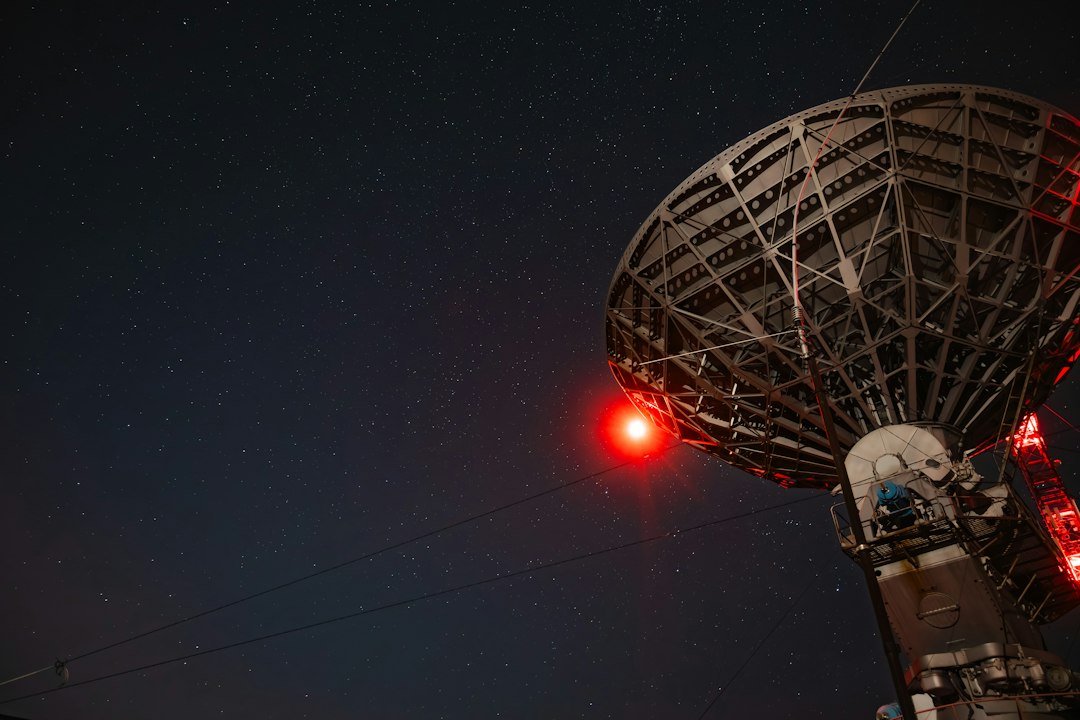
Featured image: stock photograph by Roman Ilyuhin on Unsplash; shown as a visual metaphor, not a documentary image of the fictional setting.