Writing a Spaceship Life-Support Failure That Makes Sense
Writing a spaceship life-support failure becomes much easier when you stop treating “the oxygen system” as one mysterious box. A crew can have breathable oxygen but unsafe carbon dioxide, adequate air pressure but contaminated water, or working scrubbers without enough electrical power. Different failures call for different procedures and create different kinds of suspense.
For a convincing scene, identify the subsystem, describe what the crew can actually observe, and give them a limited set of choices. You do not need to invent exact minutes until death. You need to establish the system’s capacities and the story’s operational constraints.
What does a spacecraft’s life-support system control?
NASA’s Environmental Control and Life Support Systems overview describes functions including atmospheric pressure, oxygen supply, air revitalization, fire response, water recovery, and waste handling. These processes are related but not identical. That distinction is the foundation for a believable emergency.
| Failure | What characters notice | What the conflict becomes |
|---|---|---|
| Carbon dioxide removal | Rising sensor readings, ventilation or scrubber alarms | Where can crew move, and how can air be cleaned? |
| Oxygen production or storage | Falling reserves or failed generation equipment | How is remaining supply allocated? |
| Pressure loss | Leak or seal warnings, changing cabin pressure | Which compartment must be isolated? |
| Water recovery | Unusable processing output or dwindling safe reserves | What activity or habitat must be cut off? |
| Power or cooling | Multiple systems degrading together | Which essential functions stay online? |
These are storytelling prompts, not operational instructions for a real emergency. A detailed technical story should be checked against the chosen mission design.
Don’t confuse oxygen with carbon dioxide
Suppose a damaged scrubber stops removing exhaled carbon dioxide from cabin air. The scene is not necessarily solved by opening an oxygen tank. Removing carbon dioxide and supplying oxygen are separate functions, even though both affect breathing.
In fact, the Apollo 13 crisis included a famous carbon-dioxide challenge: the crew and ground teams had to adapt available lithium-hydroxide filtration supplies for a different module. NASA’s technical overview of spacecraft carbon dioxide hazards recounts the problem. The lesson for fiction is not to copy the incident. It is to give crews credible knowledge, mismatched hardware, and decisions under constraints.
Five scene-building questions
1. How does the crew discover the problem?
Choose a clear clue: an alarm, disagreement between independent sensors, a maintenance trend, a pressure reading, an unexpected odor, or a change in airflow. If the crew notices symptoms, don’t make them instantly diagnose the cause unless they have reason to recognize it.
2. What still works?
Most emergencies are made interesting by partial functionality. A backup scrubber might be operational but too small for the full crew. One habitat module may be safe but inaccessible without crossing a compromised corridor. State the limitation before the hero proposes a solution.
3. Who has authority?
The commander, systems engineer, medic, and mission controller may disagree. A decision can be technically sound but politically explosive when it forces a choice about whose compartment retains power. On a generation ship with its own government, there may be no Earth authority capable of intervening.
4. What information is missing?
A sensor may be broken or misleading. A maintenance record may be outdated. The ground team might be hours away from receiving a message. Our guide to communication delays in space stories helps make remote support feel realistic.
5. What cost survives the repair?
If the crew fixes a valve but sacrifices the greenhouse’s water supply, the scene continues to matter after the alarm stops. A good emergency changes resources, alliances, trust, or the mission’s objectives.
A sample crisis: the ventilation mystery
On the fictional courier ship Stillwater, a carbon-dioxide reading rises slowly in a compartment that appears to have working fans. The engineer wants to isolate the compartment immediately. The medic argues that a child recovering inside cannot be moved through the cold transfer tube. Meanwhile the shipboard AI reports that the backup scrubber passed its previous self-test but cannot confirm whether the intake valve is moving.
The first turning point is not an explosion. It is a discrepancy: carbon dioxide is rising only in one part of the ship. The engineer suspects poor circulation rather than the chemistry of the scrubber itself. Re-routing power to a secondary ventilation line helps, but that power comes from the warming system for stored medical supplies. The crew must choose which risk they can monitor and which they cannot.
This kind of scene produces suspense through uncertain information and limited options. The fiction can stay technical without becoming a maintenance manual.
Three mistakes to avoid
- Every failure becomes instant suffocation: Different problems unfold differently. Establish your ship’s design and reserve capacity rather than inventing a universal countdown.
- Every solution is an improvised miracle: Competent crews train, check alternatives, isolate faults, and protect themselves. The improvisation should grow from tools or procedures introduced earlier.
- The repair erases consequences: A repaired system may still mean lost supplies, injuries, damaged relationships, or a canceled mission.
Life-support emergency planning checklist
- Which function failed, and what independent measurements support the diagnosis?
- What parts of the spacecraft remain habitable?
- What backup capacity exists and how is it accessed?
- What do the crew and mission control each know?
- Can the crew physically reach the damaged equipment?
- What resource does the attempted repair consume?
- Who suffers from the trade-off, even if everyone survives?
Frequently asked questions
Is life support just oxygen generation?
No. It also involves pressure, carbon-dioxide removal, air quality, water handling, and other environmental controls.
Should a spacecraft emergency always involve a leak?
No. A sensor fault, water processor problem, scrubber failure, or electrical shortage can be just as dramatic and more distinctive.
How technical should the explanation be?
Use enough detail for readers to understand the options and consequences. Explain the one subsystem relevant to the choice, not the whole vehicle.
For related setting choices, read rotating habitat worldbuilding and space-colony writing prompts. The strongest spaceship emergency is one where the limits of the machine force a human—or machine—decision.
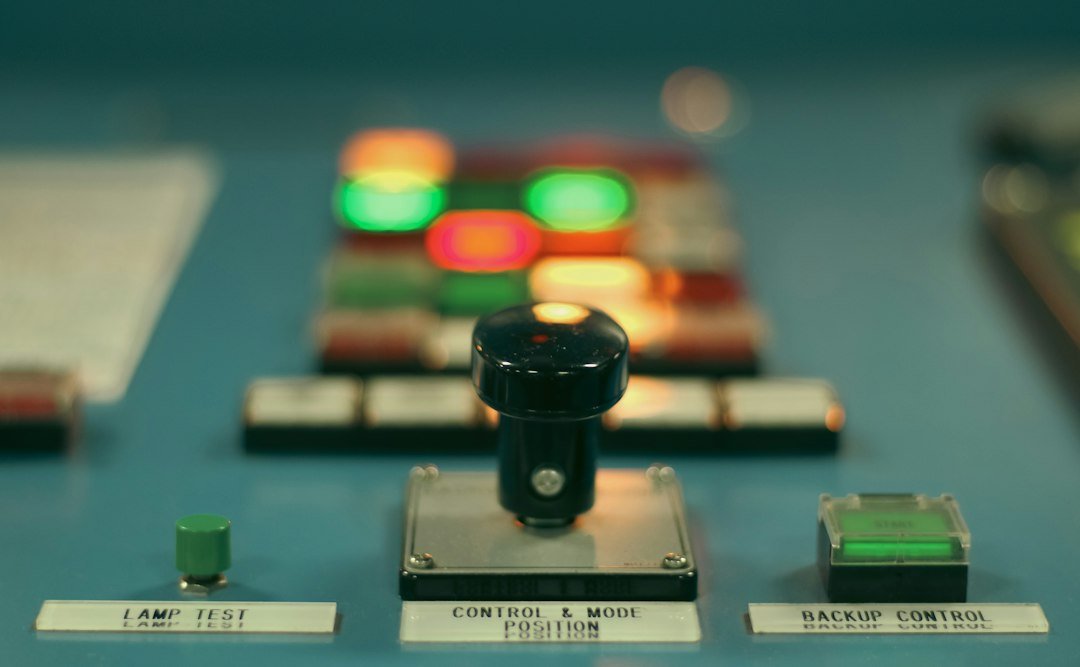
Featured image: stock photograph by iSawRed on Unsplash; the photo is illustrative rather than a depiction of a real fictional technology.