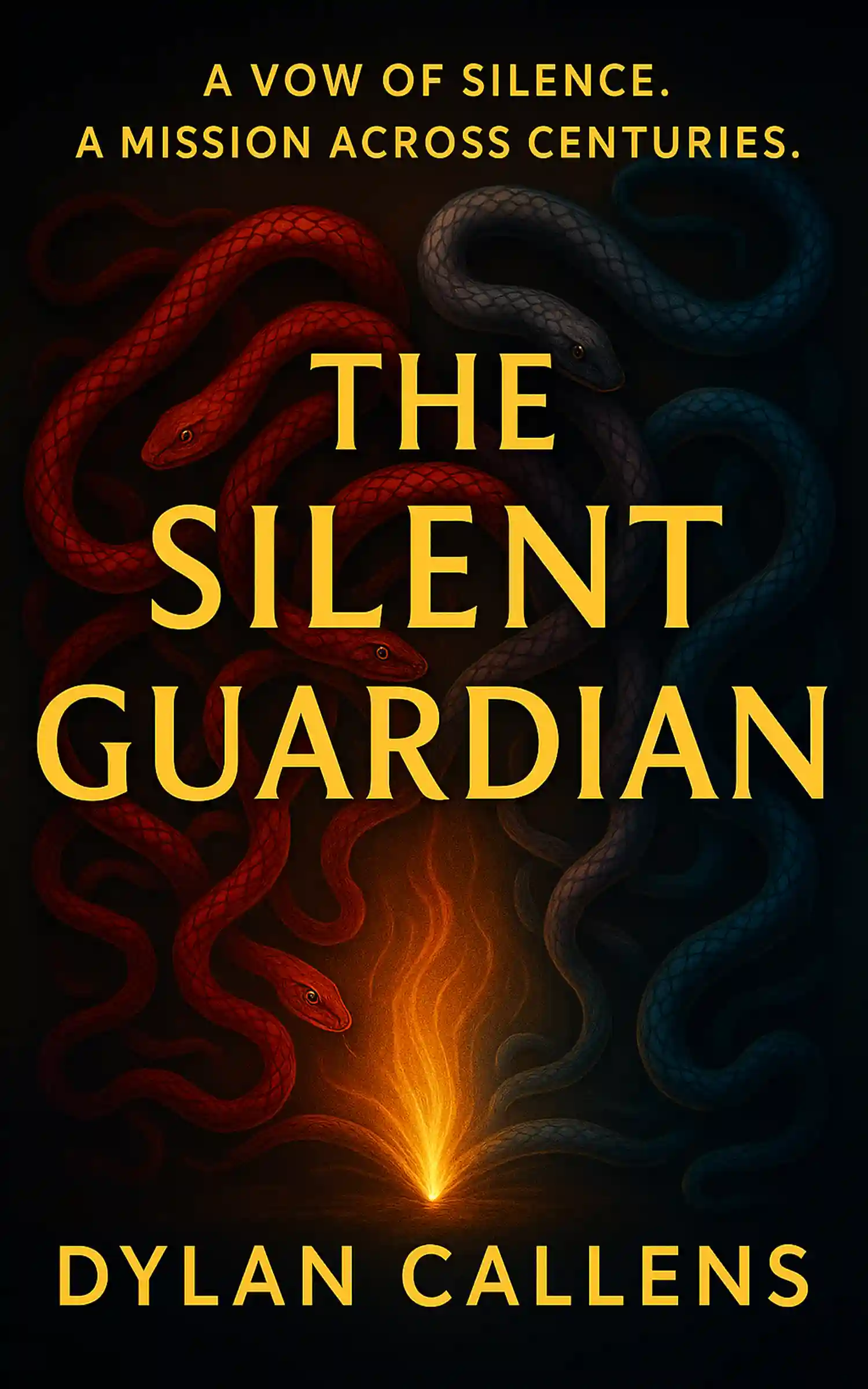
The Silent Guardian — Chapter 16, Part 2: The Renegade Commune
This installment continues The Silent Guardian Series. Previous: Chapter 16, Part 1: The Kidnapping.
I consider asking them to join me, but navigating the commune will be easier if I’m alone.
“Xia and I need to gather some information while you’re gone,” Clara says. “We met someone who helps us with time-traveling matters. He’s odd. We don’t trust him much; however, he helped us find you. He might have information on what the Phylax are planning next. If we’re going to take them down, we need as much information as possible.” When she finishes talking, she disappears toward the entrance.
Take them down. I hadn’t considered that before. While the prospect of destroying them is intriguing, it may be crossing a threshold from which I will never return. I sense that this is the beginning of something terrifying. I am not yet convinced this is the correct path.
Clara’s strength, her ability to hold onto hope after everything she’s been through, amazes me. She fights for answers, as does Xia. Watching them makes me wonder if I could find something to hold onto.
Clara reappears with a set of car keys. “I think it’s in the garage,” she says.
Before parting ways, Xia adds one word: “Godspeed.”
I inhale deeply, grounding myself for what lies ahead. The truth awaits, buried in the years stolen from me. I know I can’t stop until I recover it.
The garage door groans as it lifts, revealing an old Mazda. I slide into the driver’s seat. The engine starts with a low hum—a steady rhythm that seems too relaxed compared to what’s inside me. I grip the steering wheel, feeling the worn pleather beneath my palms ground me in the present.
The Renegades live in the Black Hills of South Dakota. It has always been a distant place I never wanted to see again. Now, it’s the place that might hold the answers I need. My hands tighten on the wheel.
I pull out of the neighborhood, leaving behind the house that vaguely reminds me of a different life. The city fades in my rearview mirror as the highway stretches westward. Mile after mile, the urban sprawl gives way to rolling fields, then patches of forest, and eventually, open country where the sky seems endless. The hum of the car engine becomes a backdrop to my pondering.
The rage that burns is all-consuming. An unwelcome thought worries me as the miles stretch on: when the anger runs its course, what then? What if emptiness is all I feel?
I grip the wheel tighter, shaking the thought away. The answers won’t come from sitting here, spiraling. They’ll come from facing the people who stole everything from me.
The solitude should feel comforting. It doesn’t—not now. I’ve walked alone through deserts and mountains, where there were no sounds but my own footsteps. I never felt lonely. Yet here, on this long stretch of road winding into the unknown, loneliness is a spear slipping into my soul.
In the rearview mirror, a black SUV appears for the third time. It trails me at a steady distance. It’s probably nothing—a coincidence, I tell myself. It creates a tension that coils into the two-headed serpent seared into my flesh. Every so often, the vehicle vanishes, reappearing hours later.
A memory emerges.
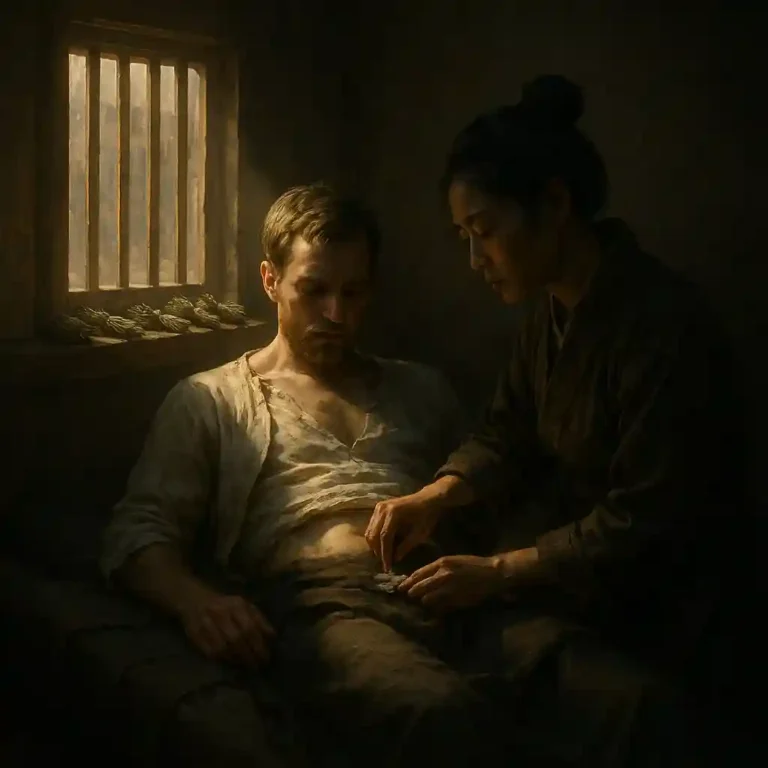
The man I once called father at the Renegade compound was caught in a state of fury. I can’t even remember the reason; not that he ever needed one. His wrath left me with the gift of a spiral fracture winding through my forearm. The community nurse set it in a cast. Life went on. To her, it was another routine injury. To me, it wasn’t. It has always been an unanswered question that gnaws away. Why? Why did he do it? Why any of the other beatings? There was no reason, merely his rage crashing down on me repeatedly.
If Philip had never taken me from my real family, none of that would have happened. Now I know Philip was part of it. He was the one who ripped me out of my family’s grasp, putting me into the hands of those who abused me.
The hours stretch endlessly. The ache in my shoulders grows sharper with every mile. My hands cramp from gripping the wheel too tightly, yet I can’t seem to let go.
The road becomes a thin black ribbon stretching across fields of gold and green, broken by the occasional farmhouse or weathered barn. Dark forests rise in the distance, a watchful army standing at attention. The world peels away layer by layer. Memories drift in and out, some clear, others distorted. They slip between the cracks of certainty and doubt.
When we recall a memory, we aren’t remembering the original event. We’re remembering the last time we thought about it. Each recollection is a copy of a copy, warped by time, emotion, and repetition. Maybe that’s why my past has always felt like a collection of half-truths. Whenever I pull an old moment from the depths, I might reshape it, unintentionally altering the details. How much of what I remember is real? And if memory is this fragile, how much of anyone’s past is the truth?
I tighten my grip on the wheel, my knuckles aching. The past I remember is fractured, rewritten, pieces scattered across years of silence. Philip, the Phylax, the compound, the man I once called father—were they precisely as I recall, or have I filled in the gaps with whatever version of events made sense?
At least now, I don’t have to rely on memory alone. I can step into the past and see it for myself. The thought should be a relief—finally, the truth. But what if the truth is worse than the memories?
The tires crunch over gravel as I turn onto the dirt road. I finally see it: a narrow turnoff nestled among the trees. An old wooden post indicates I am close. I slow the car as I approach. The symbol, carved deep into the wood, catches my attention. It’s the same one that marks my arm—two serpents curling toward infinity. They look ready to strike each other. The Mark of the Phylax. A mar of betrayal.
I guide the car onto the dirt road. The closer I get, the more the landscape looks familiar. A stretch of forest here, a crumbling stone wall there. Fragments of childhood flash: running barefoot through fields and the sting of splinters from wooden fences.
The vehicle shudders. Towering trees crowd in from both sides, their branches forming a shaded canopy overhead. The path twists and curves as it pulls me further away from the present world, deeper into the past. After several miles, the forest finally thins. A sprawling compound nestled among the woods opens up.
A large metal gate looms, rust streaking its iron bars. Beyond the gate, I see several scattered buildings. A barn with weathered wooden slats. A row of small cabins clustered together. The schoolhouse where I learned history and language. Several other structures dot the landscape. What draws my attention most is the church, rising at the heart of the compound. It is larger than necessary for a community this size. Its steeple juts into the sky, reminding everyone here of something oppressively sacred.
Farther back, fields stretch out. Rows of crops sway in the fading light. Small patches of forest are woven between the farmland, creating pockets of shade.
This place is self-sufficient, a community built on survival and secrecy. Even though I lived here for nearly nine years as a child, I know nothing about it.
Continue with Chapter 17, Part 1: Rasha. New installments publish daily at 5:00 AM.
Start reading The Silent Guardian from the beginning · Browse all Silent Guardian Series posts.
2 Comments
Comments are closed.