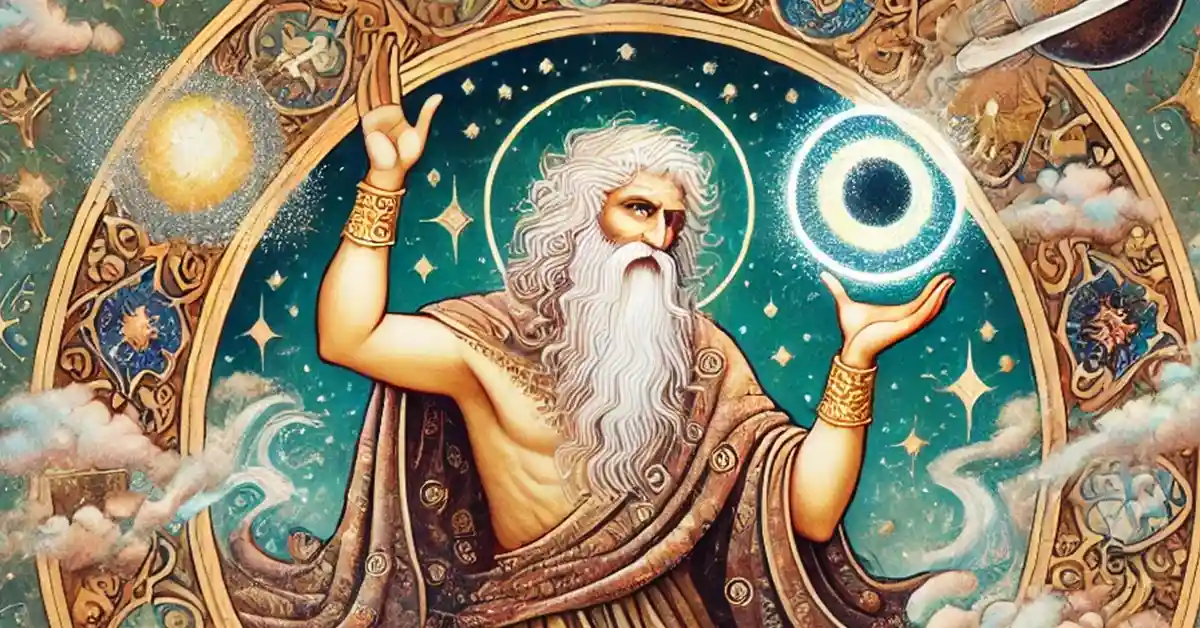
What Is Zurvanism? Zurvan, the God of Time, Explained
Zurvanism is the name commonly given to a version of ancient Iranian Zoroastrian theology in which Zurvan, a divinity associated with Time, stands before the opposing figures Ohrmazd (Ahura Mazda) and Ahriman (Angra Mainyu). In its best-known creation myth, the two are portrayed as Zurvan’s twin offspring. Historians agree that the myth circulated in late antique Iran, but they debate whether “Zurvanism” was ever a separate, organized religion with its own followers and rituals.
This distinction matters: the story of Zurvan is well documented, while many popular claims about a distinct Zurvanite cult are far less secure. Here is what the surviving sources tell us—and why the idea of Time itself giving rise to good and evil remains so compelling.
What is Zurvanism?
Zurvanism refers to a theological interpretation associated with Zoroastrianism that gives a primordial role to Zurvan (“Time”). It is often described as a branch or sect of Zoroastrianism, but that label is debated. Modern scholarship cautions that ancient reports of different beliefs do not necessarily prove the existence of a separate religious institution. The central evidence is a creation story in which Zurvan precedes the two opposing spirits, rather than an independently documented collection of temples, ceremonies, or rules.
Put simply: Zurvanism is best approached as a historically attested myth and theological idea, with its exact social organization uncertain. It should not be confused with Zoroastrianism as a whole, or with a modern revival movement.
Who was Zurvan, the ancient Iranian god of Time?
Zurvan (also written Zarvan or Zruvan) is an ancient Iranian divine figure associated with time. The Avestan word behind the name has the sense of a period or span of time. In the surviving Avesta, Zurvan appears in a limited number of passages among other divine beings; he is not presented there through the famous story of fathering the two spirits.
One important expression is Zurvan Akarana, commonly rendered “Boundless Time” or “Infinite Time.” The distinction between limited time and time without an end helped later thinkers explore how the created world relates to eternity.
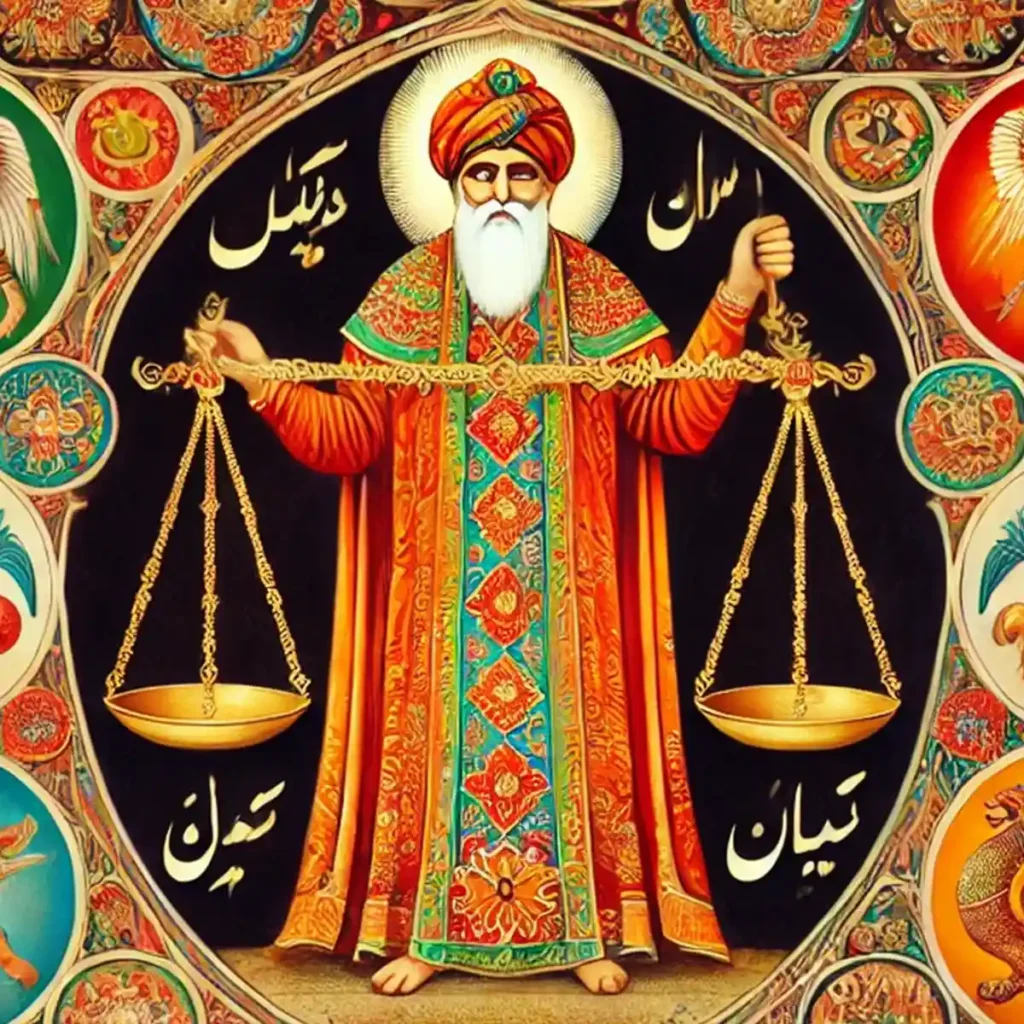
The Zurvan creation myth: why were Ohrmazd and Ahriman twins?
In the best-known version of the myth, Zurvan seeks to have a son and performs sacrifices over a vast span of time. A moment of doubt enters the story: Ohrmazd, associated with goodness, comes from the intention and sacrifice, while Ahriman, associated with destructive opposition, arises from the doubt.
Zurvan has promised rule to the firstborn. In some retellings, Ahriman forces his way out first and claims that promise. The resulting arrangement allows the conflict between the two spirits to unfold over a limited period, rather than making evil ultimately victorious.
Specific details vary among the surviving versions. The larger point, however, is consistent: the opposing spirits share a prior source in Zurvan. This functions like a prelude to the better-known Zoroastrian account of the cosmic struggle. It does not establish that every Zoroastrian accepted this particular explanation of their origin.
Zurvanism vs. Zoroastrianism: what is the difference?
Zoroastrian traditions place great importance on Ahura Mazda, truth and order, and the opposition between beneficial and destructive forces. The Zurvan myth adds a particular answer to a question raised by that opposition: If the two spirits are described as twins, what—or who—came before them?
| Question | Wider Zoroastrian tradition | Zurvan creation myth |
|---|---|---|
| Who is central to the account? | Ahura Mazda (Ohrmazd), with accounts of the opposed spirits | Zurvan as a pre-existing figure before the twins |
| How is the struggle explained? | Good and destructive forces are in opposition | The struggle follows a story about the twins’ origin |
| Is the origin story in the surviving Avesta? | The Avesta is a foundational source for Zoroastrian tradition | The specific twin-birth narrative is absent from the surviving Avesta |
| Was it a separate religion? | A documented living religious tradition | Historians disagree about a distinct organized Zurvanite community |
It is tempting to reduce the difference to “one god versus two gods” or “free will versus fate.” Those modern summaries flatten a complex religious history. The more precise distinction is which creation narrative a source uses.
Where did Zurvanism come from, and when was it important?
Accounts of the Zurvan myth are especially visible in the context of the Sasanian Empire (224–651 CE). Fifth-century Armenian writers, including Eznik of Kolb and Elishe, preserve forms of the myth. Related testimonies occur in Syriac, Greek, and later Arabic sources. Middle Persian Manichaean texts also use the name Zurvan for a supreme divine figure, although that alone does not describe the beliefs of all Zoroastrians.
Some evidence suggests the myth had a meaningful place in Sasanian court theology, particularly in the fifth century. Earlier origins have been proposed, but scholars dispute how far backward the fully developed myth can be traced. It would be misleading to describe Zurvanism confidently as a well-documented pre-Zoroastrian religion.
The evidence itself is part of the story: much of what we know comes from authors outside Zoroastrianism, some of whom wrote polemically. Modern historians compare these reports carefully rather than treating every description as a neutral account of religious practice.
Did Zurvanites worship in temples or follow special rituals?
We do not have firm evidence for a distinct set of Zurvanite temples, rituals, or a separate priesthood. The older article described practices such as astral worship as established features of Zurvanism. That goes beyond what the sources securely show. Ideas about fate, cosmic time, and the movement of the heavens have been connected with Zurvan by scholars, but those associations are not proof of a specific worship practice.
Similarly, popular images of a time deity surrounded by serpents or circles should not automatically be labeled ancient depictions of Zurvan. Artistic interpretations can be evocative without establishing historical iconography.
Did Zurvanism teach fate instead of free will?
The image of infinite Time standing above the cosmic struggle invites questions about fate, freedom, and whether history is already determined. Some older accounts characterize Zurvanism as deeply fatalistic. But scholars have warned against using every ancient Iranian discussion of destiny as evidence for an organized “Zurvanite” movement.
For readers and writers, the philosophical tension is valuable without making that historical leap. A character might ask whether time sets the limits of every choice, or whether moral responsibility survives within a fixed history. Those questions also appear in our guides to the philosophy of time travel and fixed versus branching timelines. These links explore science-fiction interpretations—not claims that ancient Zurvanism predicted modern physics.
What happened to Zurvanism?
The Zurvan myth gradually became less prominent in the surviving forms of Zoroastrian literature. Its disappearance as a major creation narrative may be connected to changes in priestly teaching, greater emphasis on Avestan scripture, and the eventual end of the Sasanian court. These remain scholarly explanations rather than a precisely documented account of an institution’s collapse.
Because historians cannot establish that there was a separate Zurvanite church or movement in the first place, it is more accurate to ask why this version of the creation story became less visible than to assume a clearly defined religion suddenly went extinct.
Zurvanism in The Silent Guardian
In my novel, The Silent Guardian, the ancient cult of Zurvanism plays a small role, providing a historical and philosophical backdrop for the story’s exploration of time travel and moral ambiguity. Learning about Zurvanism deepened my understanding of how ancient cultures grappled with the concepts of destiny and morality. The cult’s belief in a neutral, infinite source of all things added intriguing layers of complexity to my narrative. While in the first book, only one scene takes place in a temple dedicated to Zurvan, book two will explore Zurvanism in more detail.
That temple is part of the novel’s fictional interpretation; it should not be taken as evidence that archaeologists have identified dedicated Zurvanite temples. Fiction can use an uncertain historical idea to create a compelling setting while being transparent about where the reconstruction becomes imagination.
To follow the story, visit the novel’s reading hub. For related questions about time, causation, and history, explore our time-travel theories and speculative science articles.
Zurvanism: frequently asked questions
Is Zurvanism the same as Zoroastrianism?
No. Zurvanism is the conventional name for a particular interpretation within the history of Zoroastrian thought. Whether it had an independent, organized community is disputed.
Is Zurvan the same as Ahura Mazda?
No. Zurvan is a figure associated with Time. In the Zurvan myth, Ahura Mazda—called Ohrmazd in Middle Persian—is one of the two offspring of Zurvan, alongside Ahriman.
What does Zurvan Akarana mean?
It is commonly translated as “Boundless Time” or “Infinite Time.” The epithet distinguishes limitless time from a finite span of time.
Was Zurvanism a real religion?
The Zurvan myth is historically attested. Whether it represented a separate religion, a sect, or an interpretation shared by some Zoroastrian thinkers is an open historical question.
Sources and further reading
- Albert de Jong, “Zurvanism,” Encyclopaedia Iranica — a critical overview of the evidence and the debate about Zurvanism as a distinct movement.
- Albert de Jong, “Zurvan,” Encyclopaedia Iranica — the divine figure and references in the Avesta.
- Encyclopaedia Iranica, “Syriac Writings on Pre-Islamic Iran” — historical accounts of the Zurvan creation myth.
Historical note: This article distinguishes the surviving creation myth from modern reconstructions of a separate Zurvanite sect; interpretations of ancient religious sources remain debated.






I used to get frustrated with slow logins on other sites but this app loads instantly every time. The selection is massive and I love how they update their promotions regularly. It feels like a place where players are genuinely appreciated rather than just treated as numbers. Highly recommend giving it a shot. 2222betapplogin