Alien Archaeology Worldbuilding: Designing Lost Civilizations
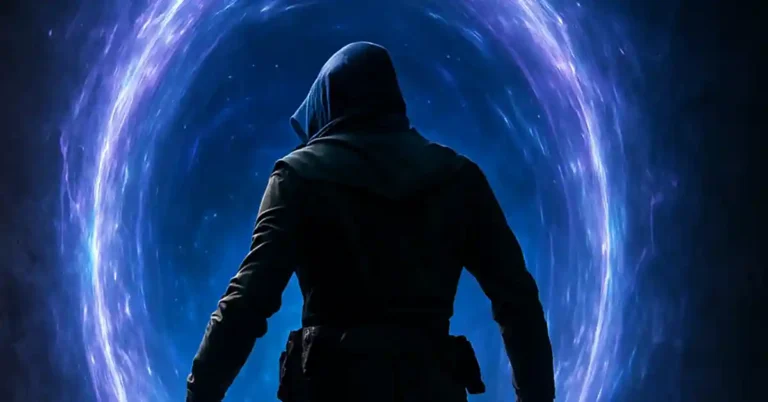
Alien archaeology worldbuilding works best when ruins feel like evidence rather than decoration. A mysterious temple silhouette can look impressive, but readers become invested when every material clue suggests something about the people—or beings—who built it.
The easiest method is to work backward. Decide what explorers find, then ask what kind of biology, environment, technology, and culture would leave those traces.
Start with preservation
Not everything survives. Organic materials decay. Metals corrode. Radiation damages data. Geological activity buries or destroys structures. A dry moon preserves different evidence from a wet, tectonically active planet.
Choose the age of the site and environment before deciding what remains intact.
1. Let alien biology shape architecture
A species with different gravity tolerance, senses, body shape, or locomotion should build spaces differently. Doors, stairs, lighting, acoustics, and room dimensions are all clues.
Do not simply make human buildings larger or stranger. Ask what “comfortable” means to the builders.
2. Separate function from interpretation
Explorers will make mistakes. A structure assumed to be religious may be industrial. A “weapon” may be a tool. A decorative pattern may encode maintenance instructions.
Misinterpretation creates plot while making archaeology feel like investigation rather than exposition.
3. Decide how information was stored
Writing is only one possibility. Data could be encoded optically, chemically, structurally, magnetically, biologically, or through a medium humans initially fail to recognize.
The storage method should reflect the builders’ senses and technology.
4. Show ordinary life, not only monuments
Trash, tools, food remains, worn surfaces, repairs, toys, transport infrastructure, and domestic spaces can reveal more than grand monuments. A lost civilization feels real when it had daily routines.
5. Give the civilization internal diversity
One planet-wide “alien culture” is rarely convincing. Different regions, eras, classes, professions, or political groups may leave contradictory evidence.
A site may have been rebuilt repeatedly, just as human cities contain layers from different periods.
6. Build a collapse or disappearance that leaves traces
If the civilization vanished, decide what happened and what physical evidence the event would leave. Slow demographic decline creates different ruins from evacuation, war, ecological change, migration, or technological transformation.
Do not reveal the answer immediately. Let clues support several hypotheses.
7. Think about contamination
Human explorers alter sites by entering them. Heat, microbes, oxygen, tools, or sampling can destroy information. A responsible expedition may face strict preservation rules.
That creates natural conflicts when scientists, corporations, governments, and settlers want different things from the same site.
8. Decide what still works
An operating machine inside ancient ruins is exciting, but ask why it survived. Is it self-repairing? Powered by a long-lived source? Recently maintained? Designed to wait?
The explanation can become the central mystery.
Use artifacts as questions
Each major object should answer one question and raise another. A perfectly preserved map may reveal the civilization’s territory while showing a marked location your explorers cannot identify. A machine may prove advanced engineering while making its purpose less clear.
If you want a reader-focused introduction to the concept, see What Is Xenoarchaeology?
Alien archaeology worldbuilding checklist
- How old is the site?
- What materials can survive that long?
- How did alien biology shape design?
- What do explorers initially misunderstand?
- What evidence of ordinary life remains?
- Were there multiple cultures or historical periods?
- What caused abandonment?
- Who controls access to the site now?
- What still functions, and why?
Alien archaeology worldbuilding becomes compelling when the ruins are not a backdrop but an argument built from evidence. Design the civilization through the traces it left, and readers can discover the world alongside your characters.